

Caption
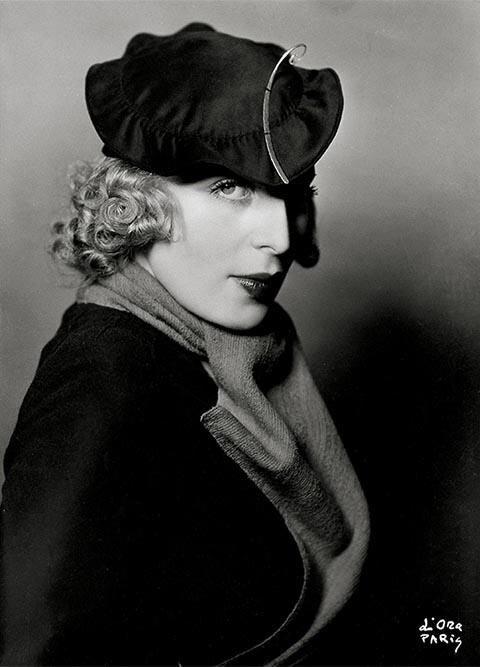
Photo: Tamara de Lempicka in a Rose Descat hat, 1932. Photograph by Madame d’Ora (Dora Kalmus)
About
Tamara de Lempicka’s work continues to captivate audiences worldwide. Her paintings have set record prices at auction, major museums have hosted retrospectives, and her bold image remains a source of inspiration in fashion, design, film, and popular culture. Recent exhibitions and catalogues have highlighted her significance within modernism, gender, and the politics of taste. Today, Lempicka is celebrated as a leading Art Deco and Modern artist, as well as a culturally iconic figure whose life and self-stylization explore questions of authorship, identity, and historical memory.
Caption
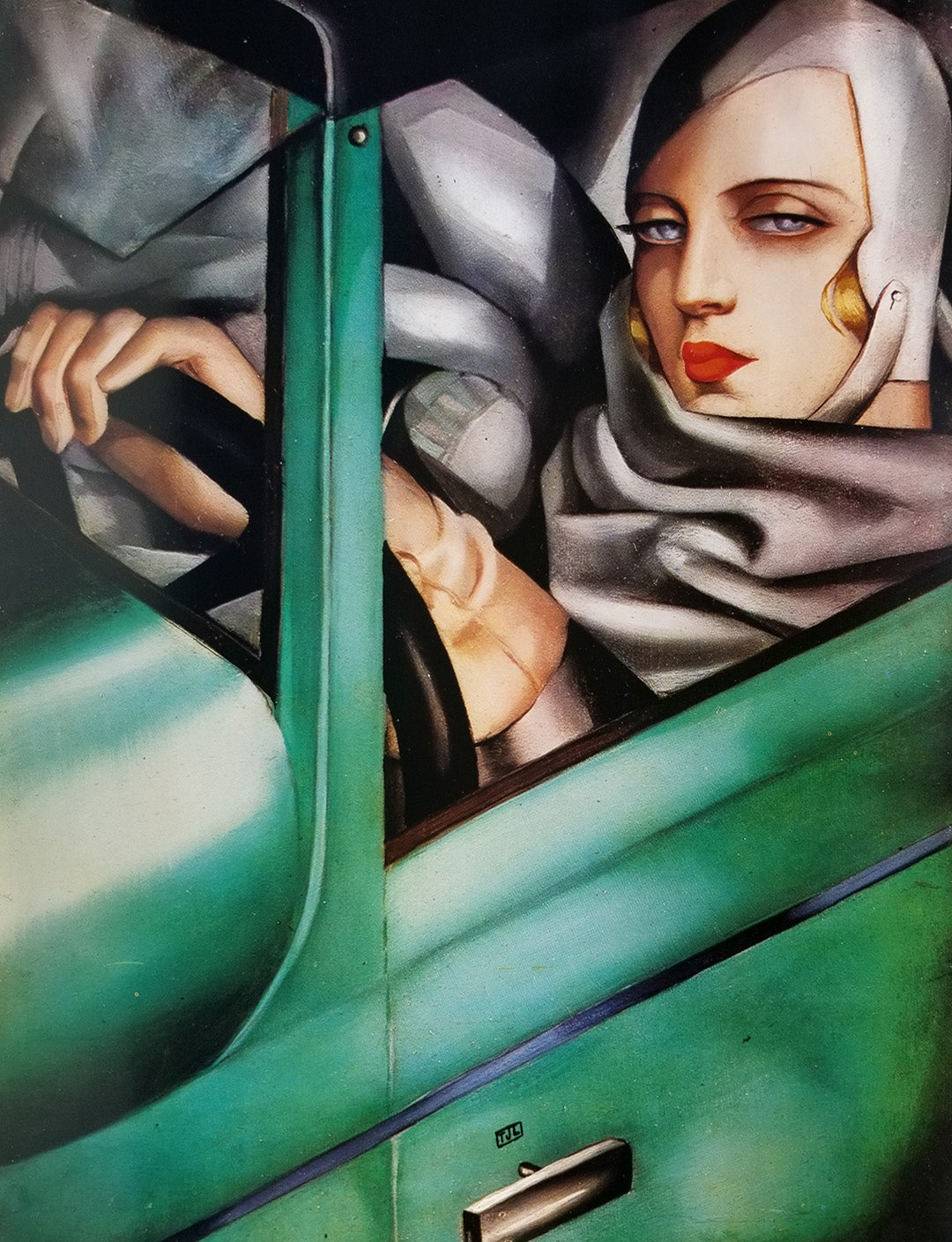
Woman in Green (Young Woman with Gloves), ca 1931. Centre Pompidou, Musée National d’Art Moderne.
Biography
Early Life and Background
Tamara de Lempicka (1894–1980) was born Tamara Rosa Hurwitz. She claimed Warsaw as her birthplace, a declaration aligned with her lifelong cultivation of a Polish identity, although archival evidence suggests she may have been born in Moscow or Saint Petersburg. She was born on June 16 (Orthodox calendar) or June 28 (Gregorian calendar) into a wealthy and cosmopolitan family. Early in her childhood, her family—including her father Benno Hurwitz, mother Malwina Dekler, older brother Stanisław Julius, and younger sister Adrienne—relocated to Moscow. Around 1900, her father left the family, and Tamara lost all contact with him. She, her siblings, and their mother were then raised primarily in Warsaw by her maternal grandparents, Bernard and Klementyna Dekler, prominent members of the cultural and social elite.
In 1907, Tamara traveled to Italy with her grandmother, where she developed an early love for art, particularly the Renaissance painters. In 1911, while visiting her aunt Stefania Stifter in Saint Petersburg, she attended a masquerade ball dressed as a Polish peasant girl walking a goose on a leash, where she met her future husband, Tadeusz Junosza Łempicki. That same year, her beloved grandmother Klementyna passed away. By 1914, Tamara moved to Saint Petersburg to live with her aunt and uncle, who were connected to high society and associated with the imperial family.
As German troops advanced on Poland in 1915, Tamara convinced her aunt and uncle to allow her to marry Tadeusz. In 1916, they were wed—according to Tamara's account, in the chapel of the Knights of Malta in Saint Petersburg—and their only daughter, Marie Christine, known as Kizette, was born on September 16. Following the February Revolution in 1917, Tamara fled to Copenhagen while Tadeusz remained briefly in Saint Petersburg; during this period, he was arrested by the Cheka, the Soviet secret police, but was later released through Tamara's family contacts and reunited with the family. In 1919, they moved to Paris, where Tamara began formal artistic training and launched her professional painting career, selling jewelry to support herself.
Artistic Training and Development
In Paris, Tamara enrolled at the Académie Ranson in 1920, studying under the Nabis painter Maurice Denis, and in 1921 began taking lessons from André Lhote, the only teacher she would acknowledge. She also published fashion illustrations during this period. Her distinctive style combined geometric precision and planar composition with a sculptural treatment of the human form, drawing inspiration from both modern Cubists and classical masters such as Botticelli, Michelangelo, Ingres, and Pontormo.
Rise to Prominence
Tamara's first exhibition came in 1922 at the Salon d'Automne with Portrait of a Young Woman in a Blue Dress. In 1923, she moved to Montparnasse, where tensions with Tadeusz intensified as a result of her long hours spent painting at the easel, her active social life, and her multiple love affairs. Her first solo exhibition was held in Milan at Bottega di Poesia in 1925. During the late 1920s, she gained international recognition: she exhibited in the United States for the first time in 1929, including at the Carnegie International Exhibition, won a bronze medal at the General National Exhibition in Poznan for The Communicant, and saw her iconic Self-Portrait (Tamara in a Green Bugatti) featured on the cover of Die Dame. Her work was further celebrated in exhibitions across Europe, and she began contributing to major magazines such as Die Dame and Swiat.
Mid-Career and Personal Life
In 1934, Tamara married the Hungarian Baron Raoul Kuffner de Diószegh, with whom she had maintained a relationship for several years. Earlier, she had painted his former lover, Nana de Herrera, and upon completing the portrait, she replaced her as Kuffner's companion. By the late 1930s, the increasingly volatile political situation in Europe prompted Tamara and Kuffner to relocate to the United States in 1939, initially presenting the move as a long vacation.
Wartime and American Career
In 1940, the Kuffners settled in Beverly Hills, renting the villa of filmmaker King Vidor and hosting high-profile social events. That year, Tamara's daughter Kizette and Kuffner's daughter Louisanne escaped Nazi-occupied France and joined the family. Tamara actively contributed to humanitarian efforts, organizing "Paderewski Day" in 1941 to raise funds for Polish relief, and continued exhibiting in the United States at galleries including Julien Levy, Courvoisier, and the Milwaukee Art Center. The Kuffners acquired a Manhattan duplex on East 57th Street during this period and moved to New York City.
Later Life and Legacy
Tamara returned to Europe periodically and continued to exhibit throughout the 1950s and 1960s. After the death of Baron Kuffner in 1961, she moved to Houston, Texas in 1963 to live near Kizette and her family. In the 1970s, she divided her time between Houston, Paris and Cuernavaca, Mexico, purchasing the home "Tres Bambus" and continuing to paint. She endured health challenges, including surgery for carcinoma of the tongue, yet remained professionally active, contributing works to public institutions in France.
Tamara de Lempicka passed away on March 18, 1980. Following a funeral mass, her daughter Kizette and her good friend, the sculptor Victor Manuel Contreras, honored her wishes by scattering her ashes over the Popocatépetl volcano. Throughout her life, Tamara's daring vision, technical mastery, and glamorous persona established her as a defining figure of the Art Deco movement—a legacy that continues to captivate collectors, designers, and admirers worldwide.
Biography Highlights
Tamara Rosa Hurwitz is born to Malwina Dekler and Benno Hurwitz on June 16 (Orthodox Calendar) and June 28 (Gregorian Calendar). Her place of birth is still not confirmed, but she claimed it was Warsaw (it could have also been Moscow or St. Petersburg).
Tamara's father leaves the family, and she loses all contact with him. Malwina, together with Tamara and her siblings, Stanisław and Adrienne, moves in with the maternal grandparents, Klementina and Bernard Dekler, who owned residences in both Moscow and Warsaw.
Tamara travels to Italy with her grandmother, where she develops an early love for art, particularly Renaissance painters.
While visiting her aunt Stefania Stifter (aunt Stefa) in St Petersburg, she attends a masquerade ball dressed as a Polish peasant girl walking a goose on a leash. This is where she meets her future husband, Tadeusz Junosza Lempicki, an aristocratic Polish lawyer. This same year, her beloved grandmother Klementyna dies.
Tamara moves to St. Petersburg to live with her aunt and uncle, who belong to the high society and associate with the imperial family.
As Tadeusz Lempicki makes clear his intention to return to Poland, German troops invade the country. Tamara convinces her aunt and uncle to allow her to marry Tadeusz.
According to Tamara's account, the wedding is celebrated in the chapel of the Knights of Malta, St. Petersburg, but there is no evidence of this. On September 16, their only daughter, Marie Christine, nicknamed Kizette, is born.
After the February Revolution, the Stifters, Malwina and Adrienne, leave for Denmark. Tamara and Tadeusz remain in Saint Petersburg, even after the Winter Palace is taken.
Tadeusz is arrested by the Cheka, the Soviet secret police. Tamara flees to Finland and arrives in Copenhagen. Tadeusz is finally released and is reunited with the family. They move to Paris and live in hotels for a while. Tamara sells her jewelry to raise money.
During a stroll with her sister Adrienne, Adrienne recommends that Tamara study art, recalling Tamara's early talent and love for art. Adrienne herself is studying to become an architect. She tells her "find a career so you don't have to rely on your husband."
Tamara enrolls at the Academie Ranson and studies under the Nabis painter Maurice Denis.
She starts taking Art lessons from Andre Lhote, the only person she will acknowledge as a teacher. She also publishes fashion illustrations.
She exhibits for the first time at the Salon d'Automne with Portrait of a Young Woman in a Blue Dress.
She moves to 5 Rue Guy de Maupassant, Montparnasse, where she is renting an apartment. The relationship with Tadeusz deteriorates. He is upset about Tamara's affairs and the long hours dedicated to painting.
Her first solo exhibition at Emanuele Castelbarco's gallery: Bottega di Poesia, in Milan, Italy.
She visits Gabriele d'Annunzio at "Il Vittoriale" on Lago di Garda. She is hoping to paint his portrait. Kizette on the Balcony wins an honorable mention at the Exposition Internationale de la Ville de Bordeaux. Her first cover for the German Magazine Die Dame is published with The Orange Scarf, 1927.
Tadeusz starts an affair with Irene Spiess, after leaving for Poland on business since 1927.
Tamara, Tadeusz, and Irene meet in Paris to discuss Kizette's future. She travels to New York City for the first time to paint Portrait of Mrs. Bush. She exhibits for the first time in the USA at the Carnegie International Exhibition. She exhibits The Communicant at the General National Exhibition in Poznan, Poland, winning a bronze medal. Her Self Portrait (Tamara in the Green Bugatti) is featured on the cover of Die Dame.
Tamara moves to her iconic apartment on 7, Rue Mechain, Paris, designed by Robert Mallet Stevens and decorated by her sister, the renowned architect Adrienne Gorska. Her first solo exhibition opens at Galerie Colette Weil, in Paris. Portrait of Mrs Alan Bott appears on the cover of Die Dame. The Polish magazine Swiat publishes High Summer on the cover.
Tamara's recognition is mounting; she participates in many important exhibitions throughout Paris, but she falls into a depression after Tadeusz's marriage to Irene Spiess in Poland. Tamara is filmed by Pathe as she works in her studio ("Une Belle Atelier Moderne", Actualités féminines).
She marries Baron Raoul Kuffner de Diószegh, with whom she had maintained a relationship for several years. Earlier, she had painted his former lover, Nana de Herrera; upon completing the portrait, she replaced her as Kuffner's companion.
Owing to the increasingly volatile political situation in Europe, Tamara and Kuffner decide to move to the United States, telling friends they plan to spend an extended vacation there. That same year, Adrienne is awarded the Legion of Honor in Paris. Two days after the family returns from Poland, Hitler invades Poland.
The Kuffners relocate to Los Angeles, renting the villa of the filmmaker King Vidor in Beverly Hills. Tamara begins hosting cocktail parties attended by two to four hundred guests. Kizette and Louisanne Kuffner arrive in New York after escaping France with false documents and join the family in Beverly Hills. Tamara starts holding fundraising events for war relief organizations.
She holds a solo exhibition at Julien Levy Gallery, New York, as Tamara de Lempicka (Baroness de Kuffner). She organizes "Paderewski Day" to raise funds for Polish relief efforts. Exhibitions open in San Francisco at Courvoisier Galleries and at Julien Levy Gallery in Los Angeles.
Tamara de Lempicka (Baroness de Kuffner) exhibition opens at the Milwaukee Art Center. The Kuffners acquire a duplex on East 57th St. in Manhattan.
Tamara starts spending more time in France.
She exhibits at the Galerie Andre Weil in Paris.
The first book on her work written by Gabriele Mandel is published in Italy. She has a solo exhibition in Rome, organized by Principessa Stefania Barberini Colonna di Sciarra.
The Baron dies during the ocean crossing back to the United States and is buried at sea. Tamara's show opens at Iolas Gallery in New York.
Tamara moves to Houston, Texas to be closer to her daughter Kizette and her family (husband Harold "Foxy" Foxhall, and daughters Victoria and Cha).
Tamara returns to her studio in Rue Mechain to work during the Summer. She is contacted by Alain Blondel, who wishes to organize an exhibition of her works from the 1920's to 1930's. Her beloved sister dies, and Tamara attends the funeral at Beaulieu-sur-Mer.
Several of her paintings are included in exhibitions in Europe and USA.
"Tamara de Lempicka from 1925 to 1935" exhibition opens at Alain Blondel and Yves Pantin Galerie du Luxembourg in Paris. It was a big success.
She donates a group of paintings to the French government (Musee National d'Art Moderne, Paris; Musee de Nantes, Beauvais, Orleans, Le Havre and Saint Denis). She is operated on in Houston for carcinoma of the tongue. The apartment in Rue Mechain is sold. Tamara moves part time to Cuernavaca, Mexico, renting a home called "Tres Bambus".
She is hospitalized in Houston several times. Franco Maria Ricci's book "Tamara de Lempicka" is published, including personal correspondence between Tamara and Gabriele D'Annunzio. She is furious, considering the book an insult to her reputation.
She travels to Paris and contacts publishers about a possible publication of a book on her work, which includes an introduction by Germain Bazin, curator of the Musee du Louvre, Paris.
Tamara purchases Tres Bambus, in Cuernavaca, Mexico. Kizette informs Tamara that Foxy is dying of cancer. Tamara asks Kizette to come to live with her in Cuernavaca.
Kizette travels to Cuernavaca after Foxy's death. Tamara dies on March 18. There was a funeral mass in the cathedral on March 27 and, upon Tamara's wishes, Kizette and the sculptor Victor Manuel Contreras (The Maestro) scatter her ashes over the Popocatepetl volcano. Later that year, Tamara de Lempicka is published, written by H. Itsuki and Germain Bazin—the first scholarly publication on her work. She never gets to see it.